
Expanding internationally is a great milestone. One which comes with its own set of hurdles and a long list of tasks ahead. Managing payroll, employment laws, taxes, and compliance across multiple countries is already complicated enough. Add to it the challenges unique to each industry and you might be second guessing if even an employer of record in different industries is a worthwhile strategy. Be it protecting your intellectual property in the tech sector, meeting licensing standards in the healthcare industry or following strict safety regulations in construction, expanding internationally without having a solid employment strategy in place can create a lot of legal and operational risks for your business.
An employer of record (EOR) does solve these challenges by taking on the role of legal employer on your behalf. Meanwhile, you continue to manage your employees’ day-to-day work. With this model, your company can hire talent across borders without having to establish a local entity.
In this guide, we will discuss how an employer of record in different industries works, why businesses rely on EOR services, and how they support sectors including IT, healthcare, manufacturing, finance, retail, hospitality, education, and more.
What is an Employer of Record (EOR)?
An employer of record (EOR) is a third-party organization. It legally employs workers on behalf of your company. Your business still manages the employees’ performance, responsibilities, and business objectives. Meanwhile, the EOR handles the legal aspects of employment for you.
An EOR is responsible for employment contracts, processing payroll, tax withholding and reporting, benefits administration, labour law compliance, employee onboarding and offboarding, and work permits and visa support.
An employer of record reduces administrative complications and assists businesses with staying compliant for hiring overseas and building international workforces.
In contrast to traditional outsourcing, an EOR does not take over your operations. Your employees remain dedicated to your business but the EOR becomes their legal employer in the country where they work.
EOR model also differs from staffing agencies which recruit temporary workers and supervise their assignments. If you are comparing both options, understanding the differences between employer of record vs staffing agency can help determine which solution better fits your hiring strategy. You can find more about this by checking out our other guide where we discuss things about EOR in detail.
Why EOR Solutions Are THE Key Across Industries
International hiring isn’t only limited to multinational corporations. Companies of every size recruit globally to address talent shortages, enter new markets, or support remote work.
According to Gartner, nearly half of knowledge workers now operate in hybrid or remote environments. This has encouraged many organizations to expand talent searches beyond their home countries. Meanwhile, the International Labour Organization estimates that more than 169 million people work outside their country of origin each year. This emphasizes the increasing mobility of the global workforce.
An EOR enables businesses to:
- Hire employees without establishing foreign entities
- Reduce legal and compliance risks
- Enter new markets faster
- Simplify payroll and HR administration
- Support global workforce expansion
Businesses looking to understand how to hire international employees without a local entity often discover from experience that an EOR provides the fastest and most compliant route to global hiring.
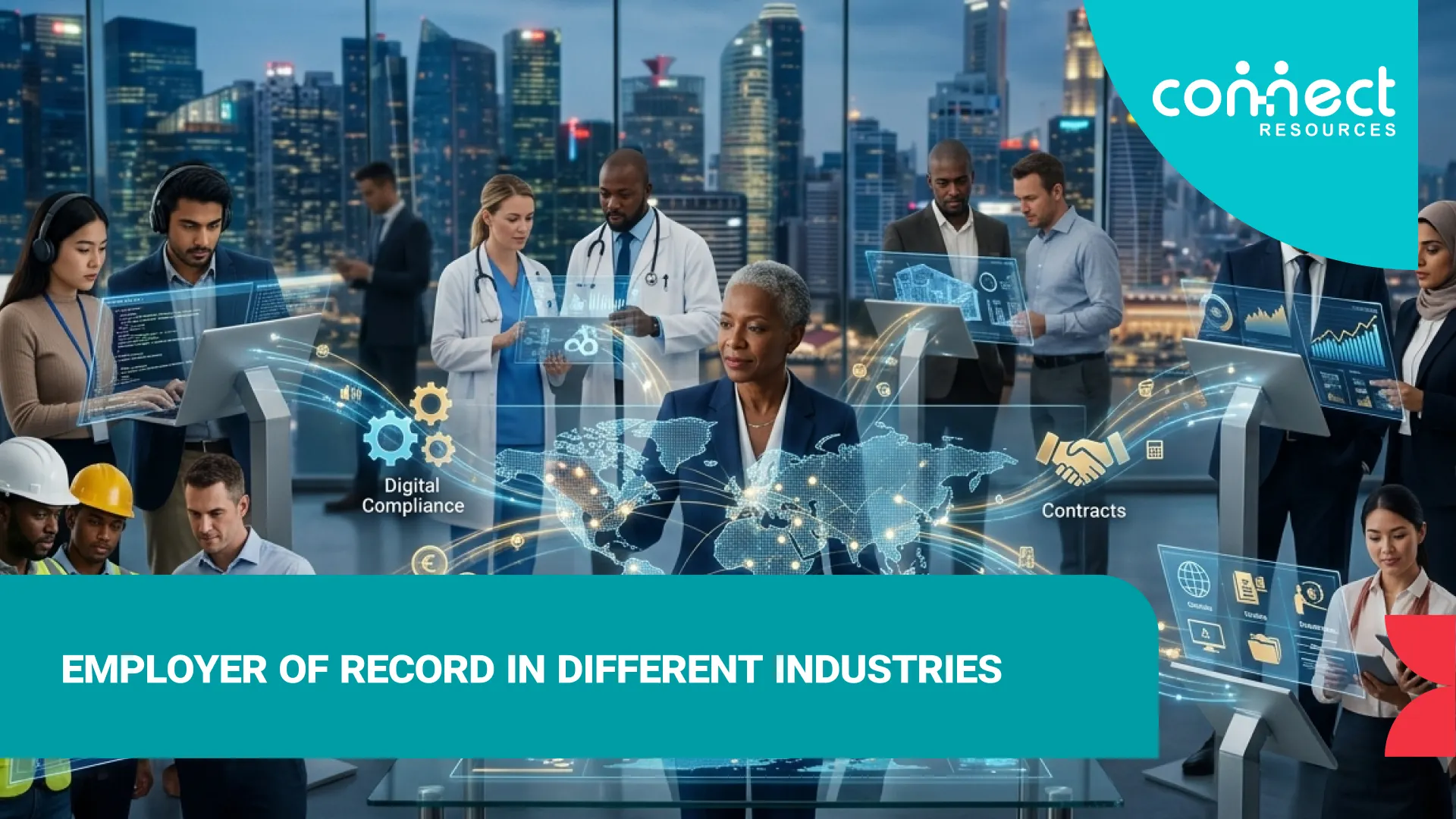
Employer of Record in Different Industries
Every industry faces different hiring challenges. A quality EOR adapts its services to those specific operational and compliance requirements.
Employer of Record for IT Industry
Technology companies compete globally for skilled developers, cybersecurity specialists, AI engineers, and cloud architects. Waiting months to establish a legal entity can mean losing top candidates.
An Employer of Record for IT industry helps businesses onboard talent quickly in countries with strong technology workforces. Developers can begin working within weeks while the EOR manages compliant employment contracts, payroll, taxes, and statutory benefits.
Technology companies also benefit from:
- Intellectual property protection through localized contracts
- Compliance with local employment regulations
- Flexible hiring for permanent or project-based developers
- Faster expansion into emerging technology hubs
Businesses managing distributed engineering teams can combine an EOR with an employer of record for remote teams strategy to simplify their international hiring and maintain operational consistency.
Employer of Record for Healthcare
Healthcare hiring involves some of the world’s most regulated employment environments. An employer of record for healthcare helps hospitals, clinics, pharmaceutical companies, telemedicine providers, and healthcare startups employ international professionals while meeting local regulations. Healthcare-specific support includes:
- Credential and license verification
- Employment compliance for medical professionals
- Country-specific payroll requirements
- Benefits administration
- Compliance with healthcare labour regulations
This becomes especially valuable when organizations recruit specialists across multiple jurisdictions where employment laws differ significantly.
Employer of Record for Construction Companies
For construction projects, you need temporary workers, specialist contractors, and international engineering teams. With an employer of record for construction companies, you can easily recruit local or international workers for your fixed-term projects.
Construction EOR services support project-based hiring, temporary employment contracts, compliance with workplace safety regulations, payroll for rotating crews, and country-specific labor law compliance. When administrative workload is reduced, project managers get more room to focus on project delivery instead of managing employment paperwork across different jurisdictions.
Employer of Record for Manufacturing Sector
Manufacturing businesses scale their workforce during seasonal demand, factory expansions, or production increases. An employer of record for manufacturing sector makes certain that companies remain compliant with industrial labor laws when expanding their operations internationally.
Manufacturing sector benefits from EOR services in the following ways:
- Compliance with wage regulations
- Factory workforce onboarding
- Payroll management
- Occupational safety compliance
- Flexible workforce scaling during production peaks
Manufacturers entering multiple countries also gain consistency in employment processes when adapting to local labor legislation.
Employer of Record for Finance and Banking
Financial institutions operate under strict regulatory oversight which makes compliant hiring particularly important. An employer of record for finance and banking assists firms recruiting compliance officers, analysts, accountants, auditors, fintech professionals, and investment specialists internationally. This way, financial organizations get access to specialized talent while minimizing legal exposure.
Industry-specific support from an EOR includes:
- GDPR and data privacy compliance
- AML-aware employment documentation
- Secure payroll administration
- Country-specific employment regulations
- Confidentiality protections
Employer of Record for Hospitality and Tourism
Hospitality businesses experience constant fluctuations in staffing needs due to tourism seasons, major events, and expansion into new destinations.
An employer of record for hospitality and tourism helps hotels, resorts, airlines, restaurants, cruise operators, and tourism companies recruit staff efficiently across borders by offering the following services:
- Seasonal hiring
- Payroll administration
- Visa coordination
- Multi-country workforce management
- Compliance with local employment standards
Hospitality employers can respond more quickly to changing demand without establishing permanent operations in every market.
Employer of Record for Retail and E-Commerce
Global retail brands and online businesses require employees in logistics, customer support, warehousing, marketing, and regional management. An employer of record for retail and e-commerce enables companies to expand internationally and avoid the complications of entity setup.
As online retailers enter new markets, compliant hiring becomes an important part of maintaining customer experience and operational efficiency. An EOR supports retail and ecommerce companies in the following aspects:
- Regional hiring
- Cross-border payroll
- Local tax compliance
- Customer support team expansion
- Distribution and logistics staffing
Employer of Record for Oil and Gas
Oil and gas operations involve remote worksites, international mobility, and highly regulated environments. An employer of record for oil and gas simplifies workforce management across exploration, drilling, engineering, and infrastructure projects.
Key advantages of EOR for oil and gas ventures include:
- Compliance with local labor legislation
- Safety-related employment documentation
- Payroll for international workers
- Mobility support
- Multi-country workforce administration
This reduces employment risk and project operators can focus more on operational performance.
Employer of Record for Education Industry
Educational institutions have to hire teachers, researchers, instructional designers, and remote education professionals worldwide. With an employer of record for education industry, universities, international schools, language institutes, and edtech companies can easily and compliantly hire educators.
As digital learning expands, educational organizations gain greater flexibility in building international teaching teams with an EOR supporting them in the following ways:
- International employment contracts
- Payroll management
- Local employment compliance
- Teacher onboarding
- Support for remote education teams
How EOR Services Adapt to Industry-Specific Compliance
EOR services adapt to industry-specific compliance. Here’s how it focuses on the local laws and regulations unique to your sector:
| Industry | EOR Compliance Focus |
| Healthcare | Professional licenses, certifications, healthcare regulations |
| IT | Intellectual property protection, data security, remote employment |
| Construction | Workplace safety regulations, temporary labor contracts |
| Manufacturing | Wage laws, occupational safety, shift compliance |
| Finance | Data privacy, financial regulations, confidentiality |
| Hospitality | Seasonal employment, visa management |
| Education | Teacher contracts, academic employment standards |
For further reading, check out our guides on EOR visa permits UAE and employer of record UAE.
Choosing the Right Employer of Record for Your Business
When you select an employer of record (EOR) for your business, you have to consider the following aspects of an EOR service provider:
- Experience within your industry
- Coverage across target countries
- Local legal and payroll expertise
- Transparent pricing
- Secure HR technology
- Strong onboarding capabilities
- Dedicated compliance support
The right service provider is the one who not only understands your specific industry but also the country where you are planning to hire.
If your business is operating in one of the more regulated sectors, your company will benefit more from partnering with service providers who have already managed similar employment scenarios. Industry-specific experience decreases potential onboarding delays and reduces most of the compliance risks.
If you are expanding into the UAE, your business should prioritize providers of employer of record services Dubai who combine their regional expertise with international employment capabilities.
Strategic Benefits of EOR Across Sectors
Although every industry has different hiring needs, the broader business advantages remain consistent. An EOR helps your organization with the following:
- Enter international markets faster
- Hire employees legally without establishing entities
- Reduce compliance risks
- Simplify payroll administration
- Improve employee onboarding
- Support hybrid and remote workforces
- Scale teams efficiently
Other than operational efficiency, EORs also support workforce diversity by enabling companies to recruit talent regardless of location. This creates more hiring opportunities and supports modern distributed work models.
Businesses expanding within the UAE also use employer of record solutions to accelerate regional hiring and maintain full compliance.
When You Should Consider Using an EOR
An Employer of Record is particularly valuable when your business needs flexibility without sacrificing compliance. An EOR is the most effective strategy when you need to:
- Enter a new country quickly
- Hire employees before opening a local office
- Recruit international specialists
- Support temporary overseas projects
- Manage remote employees globally
- Reduce legal and payroll complexity
- Test new international markets
Companies expanding across the Gulf region also rely on a reliable employer of record Middle East provider to simplify hiring according to the country-specific employment regulations.
Expand Your Business Globally with Connect Resources
You don’t have to spend months on legal preparation or have an expensive entity setup when hiring globally. As we have shown in our guide on employer of record in different industries, EOR solutions adapt to the unique compliance, payroll, and workforce needs of your specific industries and sectors.
When you choose the right EOR partner, your business can focus on expanding instead of having to handle complicated and additional administrative workload. An experienced EOR company in Dubai can provide your business with the legal infrastructure needed to expand and hire international workforce. Want to see this in action? Get in touch with our team at Connect Resources now.
FAQs
How does an EOR work in different industries?
As the industry of healthcare focuses on licensing compliance, IT prioritizes intellectual property protection, construction emphasizes safety regulations, and finance requires strong data privacy and regulatory compliance, an EOR adjusts its services based on industry requirements.
Is using an EOR cost-effective for small businesses?
Yes, using an EOR is cost-effective for small businesses. For many small and medium-sized businesses, using an EOR is more cost-effective than establishing a foreign legal entity, especially when they are hiring only a few employees in a new market.
What are the legal benefits of using an EOR?
An EOR helps businesses comply with local employment laws, payroll regulations, tax requirements, statutory benefits, termination procedures, and employment documentation which significantly reduces compliance risks when hiring internationally.
When should companies choose EOR over entity setup?
Companies should consider an EOR when they are expanding into new markets quickly, hiring internationally without opening a local office, supporting short-term projects, testing new regions, or building distributed global teams before committing to a permanent business presence.