
Great talent won’t wait for lengthy business registrations. That’s why understanding an employer of record and how it works is essential for companies hiring across borders.
With the help of the right EOR, businesses employ talent fast; no need to set up a local entity. EOR supports your global expansion to scale faster and stay fully compliant. Many research projects predict strong growth in the global EOR market through 2026 by seeing a high demand in international hiring.
The time has arrived when every business hands over their processes to a specialist. Why not you?
Still confused? Take this article as your complete guide where you gain deeper insights about how it works, what it controls and what not, risk hiring them, and when they’re the right fit. Instead of a definition, we cover the other side of the mirror that no one talks about!
The Architecture of the EOR Model: Three Parties, One Arrangement
Understand the employer of the record model before understanding the basic workflow.
Three parties work together:
Client Company
The client company finds and interviews candidates. They decide salary and role, manage daily work, review performance, and set business objectives.
Employer of Record
To first understand the meaning of Employer of Record, read it out here.
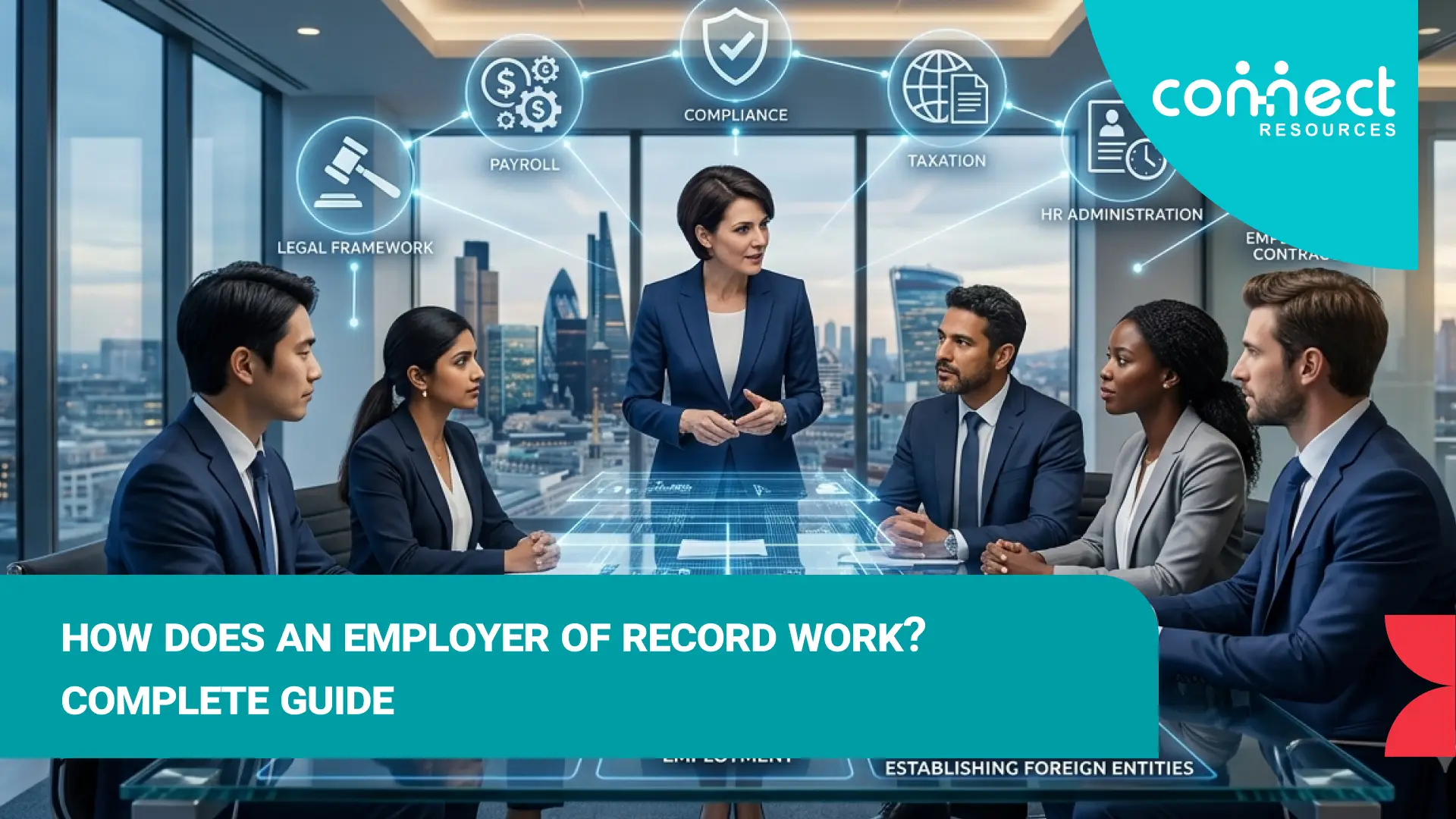
Now, let’s come to the main topic: what an EOR actually takes off from the client company. The EOR becomes the legal employer of that company. It handles employment contracts, payroll, taxes, statutory benefits, labour law compliance, and HR documentation.
Employee
The employee performs day-to-day work for the client company while remaining legally employed by the EOR.
In simple words, the EOR acts as the legal employer. The client company remains the operational manager. The structure gives the company the freedom to hire talent across borders without opening a local legal entity.
How Does the EOR Process Work? From First Contact to Full Onboarding
The process is uncomplicated when broken into stages. All stages are discussed one by one.
Stage 1 → You Select the Candidate, Not the EOR
The hiring decision always belongs to you. It means you’re the decision-maker in sourcing candidates, conducting interviews, and negotiating compensation. Even you decide who to hire. The EOR enters the scene only after you’ve made your decision.
Note that an EOR is not a recruitment or staffing agency!
Stage 2 → Signing the Service Agreement
Before employment begins, both parties sign a Master Service Agreement. The MSA outlines scope of services, pricing, responsibilities, data protection, compliance obligations, and termination terms.
Don’t consider it just paperwork; it defines each party’s legal responsibilities to each other.
Stage 3 → The EOR Creates a Compliant Employment Contract
In this stage, how an employer of record works becomes most valuable. Employment laws vary dramatically between countries. The EOR reviews your proposed employment terms against local legislation. The notice periods, probation rules, leave entitlements, working hours, minimum wage, and mandatory benefits you follow are all closely reviewed. The employee then signs a contract that fully complies with local labour laws. This step is taken to reduce compliance risks.
Stage 4 → Employee Onboarding
Onboarding begins the moment when contracts are signed. The EOR manages everything on your behalf, including identity verification, employment documentation, work permits if required, tax registration, benefits enrolment, and payroll setup. The employee joins your team without administrative delays.
Stage 5 → Ongoing Payroll & Administration
Throughout employment, the EOR manages all legal employment-related obligations. It’s either payroll processing, tax withholding, social contributions, payslips, statutory benefits, or HR records all are their responsibility, not yours.
If employment regulations change, the EOR updates payroll and compliance processes accordingly.
Stage 6 → Contract Amendments
No business is stuck at the stage where it started. Of course, it evolves. Its employees receive promotions, salaries change, and roles expand. Whenever employment terms change, the EOR prepares compliant contract amendments and makes sure that everything remains legally valid.
Stage 7 → Offboarding and Termination
When employment ends, the EOR becomes active again. The EOR handles post-employment procedures, letting you free to say goodbye to your worker by organizing a farewell. They manage final salary calculations, notice periods, severance obligations, exit documentation, and statutory reporting.
It gives your business protection from wrongful dismissal risks. Make your workers satisfied by receiving their legal entitlements in their last moments.
What You Control & What the EOR Controls?
Many assume that companies lose control over employees. This is the biggest misconception. That isn’t how the model works.
| Client Company Controls | Employer of Record Controls |
| Daily work | Legal employment |
| Projects and deadlines | Employment contracts |
| Performance reviews | Payroll |
| Salary decisions | Taxes and statutory contributions |
| Team culture | Benefits administration |
| Promotions | HR records |
| Ending the working relationship | Legal termination compliance |
The worker works for your business every day. The EOR manages the legal employment relationship behind the scenes. This separation allows you as an employer to scale across borders. Complex employment administration is no longer a problem like it was.
Interested in learning about the pros and cons of an Employer of Record? Read this guide here!
The Hidden Risk Most Companies Don’t Ask About
Hiring through an EOR gets you simplified international expansion. However, one important consideration remains unsolvable that is: Permanent Establishment.
PE is a tax concept that determines whether your company has created a taxable business presence in another country. Local tax authorities may consider your business established even without a registered office. They take into consideration when your employees generate revenue or make key commercial decisions there.
Does an EOR Eliminate PE Risk?
An EOR minimizes risks with employment and payroll. However, it doesn’t eliminate PE exposure. Many activities that may trigger PE.
These activities include the following:
- Negotiating or signing contracts on your company’s behalf
- Managing local clients independently
- Holding senior decision-making authority
- Generating revenue within the host country
Software development, marketing, or customer support are all operational roles where PE risk is much lower. Consult a tax adviser is advised alongside your EOR provider for senior commercial roles.
International vs. Domestic EOR: What’s Different?
An EOR is more versatile than you realise. Beyond supporting international expansion, it also refines domestic hiring wherever multiple legal regions create compliance challenges.
International EOR:
Recruiting across borders means taking care of additional matters. You can’t manage it alone single-handedly. Therefore, trusting an international EOR is the better option. On your behalf, they manage country-specific employment contracts, multi-currency payroll, local tax compliance, statutory benefits, visa sponsorship where applicable, and ongoing labour law updates.
Domestic EOR:
Each state of the United States has different employment laws that are difficult to understand. But a domestic EOR solves this problem like they never existed. They assist with state payroll registration, wage and hour compliance, benefits administration, state tax filings, and multi-state hiring.
GCC Perspective:
In the UAE and Saudi Arabia markets, the role of Employer of Record Services Dubai is also exceptional. Busy business owners find them helpful in handling their work visa sponsorship, WPS payroll compliance, End-of-Service Benefits (EOSB), and Emiratisation or Saudisation-related compliance.
When the EOR Model Is the Right Fit? and When It Isn’t
Tables turns quickly when you choose the Right Employer of Record. Your growth strategy has been a consideration in the decision-making process. So decide by keeping in view your next move.
An EOR is ideal when:
- You’re entering a new market.
- You don’t have a legal entity.
- You need to hire quickly.
- You’re testing market demand.
- Your overseas team is relatively small.
- You want one provider managing multiple countries.
An EOR may not be suitable when:
- You’re building a large permanent workforce.
- You’re opening a long-term regional headquarters.
- Senior employees could create Permanent Establishment risks.
- Local regulations require direct employment after a specific period.
EOR vs. Setting Up a Local Entity
The battle between EOR vs. PEO is not new, but it’s gaining momentum after EORs are in demand.
| Factor | Employer of Record | Local Entity |
| Time to hire | Days | 3–6 months |
| Initial investment | Low | High |
| Payroll management | Managed by EOR | Managed internally |
| Compliance | EOR responsibility | Company responsibility |
| Exit flexibility | High | Lower |
| PE risk | Reduced, not eliminated | Full legal presence |
| Best suited for | Market testing, remote hiring | Long-term expansion |
An EOR provides the fastest and most affordable route if you’re recruiting a handful of employees. Once headcount grows, establishing a local entity may become the better option.
How EOR Pricing Works Inside the Process
Employer of Record Cost is generally plain sailing and reflects the compliance responsibilities taken on by the provider.
Pricing Models
The two common pricing models are in practice
- Flat monthly fee per employee: It’s predictable and easy to budget.
- Percentage of employee salary: Used for higher-value or customised engagements.
Beforehand, understanding EOR costs leads to well-informed decisions that employers never regret later.
What’s Included?
Most EOR service fees cover employment contract preparation, payroll processing, tax filings, statutory benefits administration, compliance monitoring, HR documentation, contract amendments, and offboarding support.
What’s Not Included?
Still, businesses pay for their workers’ salaries, employer statutory contributions, and optional benefits beyond legal requirements.
Having an idea about how the pricing structure works lets you compare EOR services with the cost of establishing and maintaining your own legal entity.
Answers to Questions
How does an employer of record work?
An EOR becomes your workers’ legal employer. You retain responsibility for managing their day-to-day work. The EOR handles:
- Employment contracts
- Payroll
- Taxes
- Statutory benefits, and
- Labour law compliance.
What’s the difference between the legal employer and the operational employer?
Legal Employer:
The EOR is the legal employer responsible for employment compliance.
Operational Employer:
The client company remains the operational employer, directing the employee’s daily work and performance.
Does using an EOR mean I lose control over employees?
Managing projects, performance, promotions, and daily responsibilities are your responsibility. The EOR only manages the legal employment relationship.
Does an EOR eliminate Permanent Establishment risk?
An EOR substantially reduces employment-related compliance risks. However, they can’t eliminate PE risk if employees perform activities that create a taxable business presence.
Can one EOR manage employees in multiple countries?
Many global EORs support hiring across dozens of countries. They usually do it through local legal entities or trusted partners. A great benefit to businesses. They can manage international teams through a single provider.
How fast can an EOR onboard a new hire?
EOR providers are known for quick onboarding. The complete onboarding can be done within a few days to two weeks. The documentation decides the actual duration.
Which companies benefit most from an EOR?
Startups, SMEs, remote-first businesses, and expanding enterprises benefit most from an Employer of Record across different industries. They feel the need to achieve fast and compliant hiring without requiring entity setup.
Summing It All Up!
The right hiring opportunity shouldn’t be delayed. Even if it is blocked by any compliance hurdle or entity setup. That’s why partnering with an EOR is a good idea. An EOR helps you hire faster. With their presence, stay compliant and focus on business expansion. Free yourself from managing day-to-day legal complexities.
Connect Resources refines every stage of the EOR journey. It’s either compliant employment contracts, payroll, visa sponsorship, or ongoing labour law compliance. Relieve yourself to move into new markets with confidence and peace of mind.